
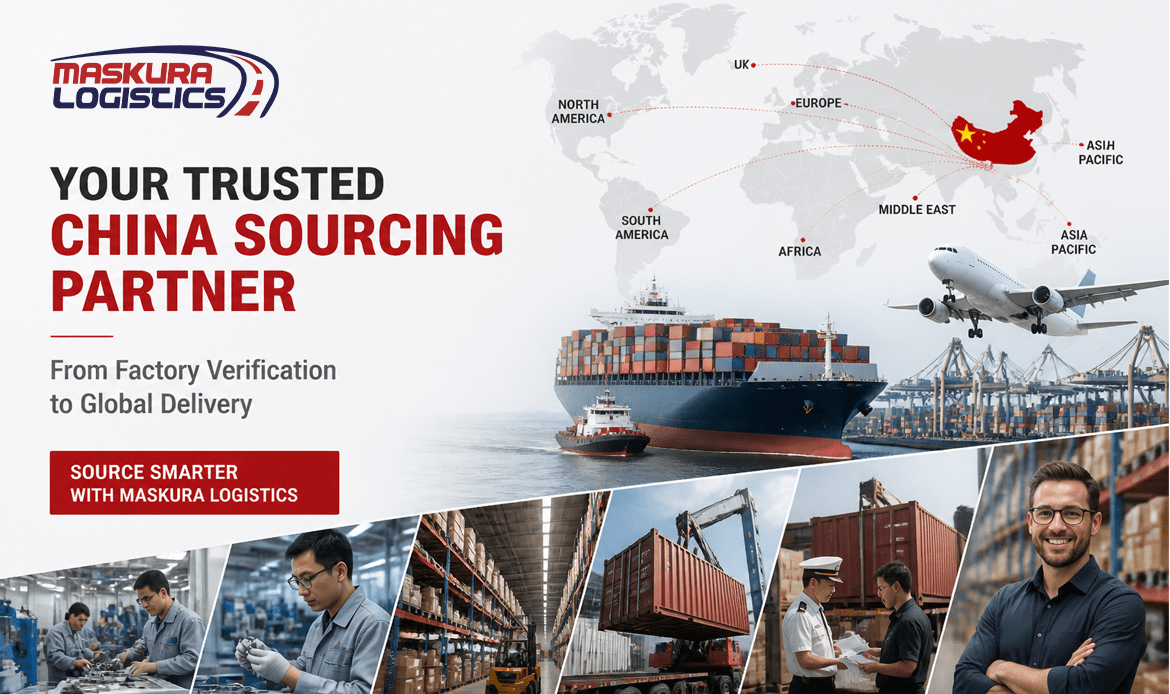
Finding reliable suppliers in China is one of the biggest hurdles facing importers, e-commerce sellers, and procurement teams today. With thousands of factories, trading companies, and Alibaba listings competing for attention, it’s easy to end up with a supplier who overpromises and underdelivers — costing you money, time, and customer trust.
The good news is that sourcing from China doesn’t have to be a gamble. With the right verification process, the right platforms, and the right partners, you can build long-term relationships with manufacturers who deliver consistent quality, on time, every time.
This guide walks you through exactly how to find reliable suppliers in China in 2026 — from choosing the right sourcing channel to spotting red flags, verifying factories, and deciding whether you need a China sourcing agent.
How do you find reliable suppliers in China? Verify business licenses and factory ownership, request third-party inspections, order samples before bulk production, check export history and certifications, and use trusted platforms like Alibaba or Global Sources — or work with a professional China sourcing agent who has already vetted local manufacturers.
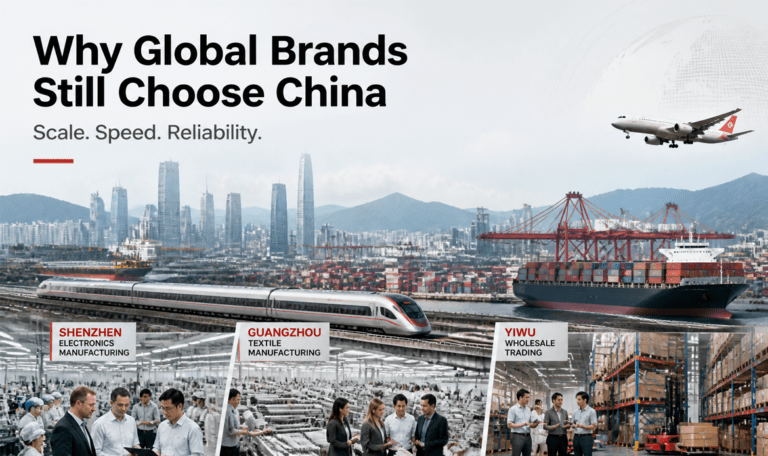
Why China is Still the Best Place to Source Products in 2026
Despite rising costs in some regions and diversification into Vietnam, India, and Mexico, China remains the world’s dominant manufacturing hub — and for good reason.
- Manufacturing ecosystem: Entire industrial clusters (electronics in Shenzhen, textiles in Guangzhou, small commodities in Yiwu) mean raw materials, components, and skilled labor are all available within a short radius.
- Competitive pricing: Economies of scale and mature supply chains keep production costs lower than most alternative sourcing destinations.
- Product variety: Almost any product category — from consumer electronics to furniture to packaging — has an established manufacturer base in China.
- Mature supply chains: Decades of export experience mean Chinese manufacturers understand international compliance, labeling, and packaging requirements.
- Export infrastructure: World-class ports, rail links, and air cargo hubs make freight forwarding from China faster and more predictable than in emerging sourcing markets.
For importers targeting the USA, UK, Australia, Canada, Europe, the Middle East, and Africa, China’s export infrastructure still offers the most reliable combination of price, capacity, and shipping options.
What Makes a Supplier Reliable?
Not every factory or trading company that appears on a search result is a China manufacturer worth trusting. Reliable suppliers tend to share several traits:
- Valid business license registered with Chinese authorities
- Factory ownership — they manufacture rather than simply resell
- Export experience with a documented history of international shipments
- Certifications relevant to your product (ISO, BSCI, CE, FDA, etc.)
- Production capacity that genuinely matches your order volume
- Clear communication in English or your preferred language
- Quality consistency across production runs, not just samples
- Financial stability to avoid mid-order factory closures
- Delivery reliability — consistent lead times without constant delays
A supplier who checks most of these boxes is far more likely to become a long-term, dependable manufacturing partner.
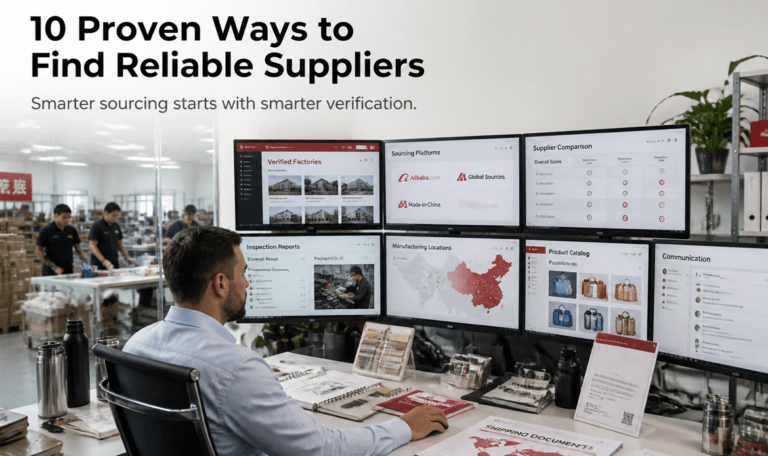
10 Proven Ways to Find Reliable Suppliers in China
1. Alibaba
Still the largest B2B marketplace for Alibaba suppliers, offering Verified Supplier and Trade Assurance badges. Useful as a starting point, but always verify independently before placing large orders.
2. Made-in-China
A strong alternative platform with Made in China suppliers that tend to skew toward larger, export-focused manufacturers rather than trading companies.
3. Canton Fair
China’s largest trade exhibition, held twice yearly in Guangzhou. Meeting suppliers face-to-face at Canton Fair allows you to inspect samples and negotiate directly.
4. Global Sources
A B2B platform popular with electronics and hardware buyers, known for stricter supplier vetting than some open marketplaces.
5. Yiwu Market
The world’s largest small commodities wholesale market. Yiwu sourcing is ideal for buyers needing variety, low MOQs, and fast turnaround on general merchandise.
6. Trade Associations
Industry-specific associations can refer verified manufacturers, particularly useful for regulated categories like electronics, toys, or food-contact products.
7. Factory Visits
Nothing replaces an in-person visit. Seeing production lines, quality control stations, and warehouse conditions firsthand remains the gold standard for factory verification China.
8. Professional Sourcing Companies
Specialist sourcing firms maintain pre-vetted supplier networks across Shenzhen suppliers, Guangzhou manufacturers, and other industrial hubs, cutting your research time dramatically.
9. Referrals
Ask other importers, industry contacts, or freight forwarders for supplier recommendations. A referral from someone who has already tested a supplier’s reliability carries real weight.
10. China Sourcing Agents
A China sourcing agent combines local market knowledge, supplier networks, and negotiation experience to find, vet, and manage suppliers on your behalf — often the fastest route to a trustworthy manufacturing partner.
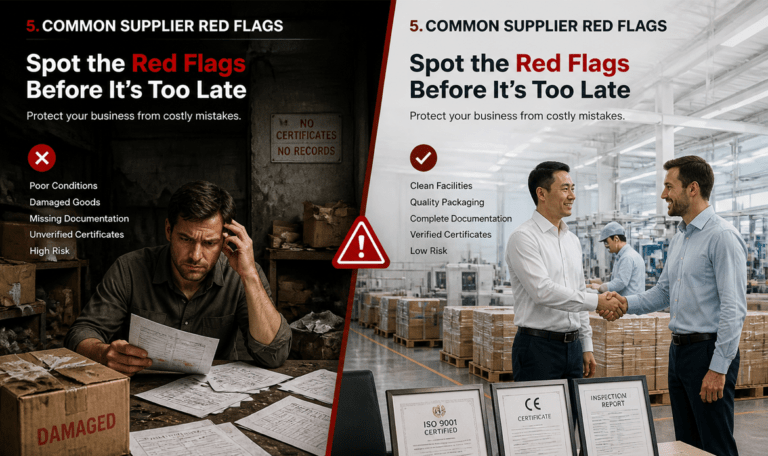
Red Flags to Watch Out For
Be cautious if a supplier shows any of these warning signs:
- Prices dramatically below market average
- Certificates that can’t be verified or look inconsistent
- Slow, evasive, or inconsistent communication
- No verifiable factory address
- Refusal to allow third-party inspections
- Requests for unusual payment methods (personal accounts, crypto-only, cash wires to individuals)
- Constant excuses for delays or missing documentation
Any one of these should prompt deeper due diligence before you commit to an order.
How to Verify a Chinese Supplier
Proper supplier verification should follow a structured process rather than a gut feeling.
- Business license check — confirm registration details match the company name and address.
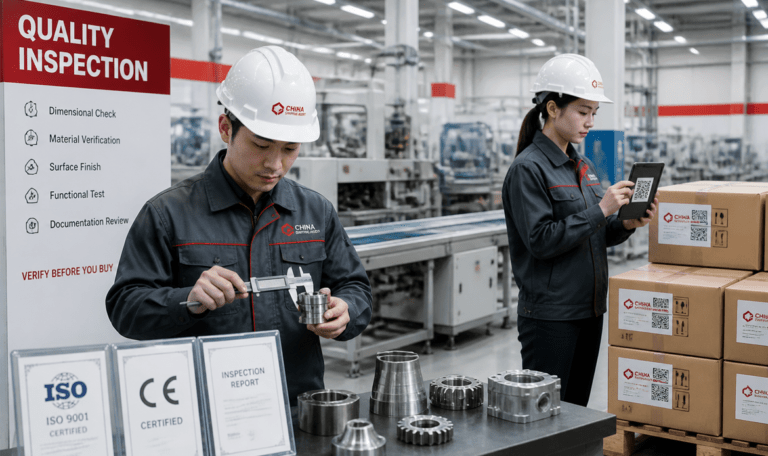
- Factory audit — an on-site or remote audit confirming the facility actually manufactures your product.
- Video inspection — a live video walkthrough of the production floor when an in-person visit isn’t possible.
- Product sampling — always order and test samples before committing to bulk production.
- Third-party inspection — an independent quality inspection China service checks goods before shipment.
- Export records — review past shipment history to confirm genuine export experience.
- Customer references — ask for contactable references from existing international buyers.
Supplier Verification Checklist
|
Verification Step |
What to Check |
Why It Matters |
|
Business License |
Registration number, company name match |
Confirms the entity is legally operating |
|
Factory Ownership |
Manufacturer vs. trading company |
Impacts pricing, control, and communication |
|
Certifications |
ISO, BSCI, CE, FDA, etc. |
Confirms compliance with your target market |
|
Export History |
Past shipping records |
Shows genuine international experience |
|
Sample Testing |
Quality vs. specification |
Confirms actual production quality |
|
Third-Party Inspection |
Pre-shipment inspection report |
Reduces risk of receiving defective goods |
|
References |
Contactable past clients |
Validates real-world reliability |
Why You Should Use a China Sourcing Agent
Working with a China sourcing agent removes much of the uncertainty from sourcing from China, especially for first-time importers or businesses scaling order volumes.
Key benefits include:
- Local expertise in navigating factories, regions, and industry clusters
- Negotiation leverage built on local market knowledge and volume relationships
- Language support eliminating miscommunication with factories
- Factory verification conducted in person, not just on paper
- Better pricing through established supplier relationships
- Quality inspection at production and pre-shipment stages
- Shipping coordination across air, sea, rail, and road
- Risk reduction through vetted, pre-approved supplier networks
- Customs documentation handled correctly the first time
- End-to-end management from sourcing through delivery
Direct Supplier vs. China Sourcing Agent
|
Factor |
Direct Supplier |
China Sourcing Agent |
|
Communication |
Often language barriers |
Managed in your language |
|
Quality Control |
Buyer’s responsibility |
Agent inspects and monitors |
|
Risk |
Higher, limited recourse |
Lower, agent vets suppliers |
|
Negotiation |
Buyer negotiates alone |
Agent negotiates using local leverage |
|
Shipping |
Buyer arranges separately |
Coordinated as part of the service |
|
Cost Savings |
Variable, unverified pricing |
Often better through agent relationships |
|
Time |
Slower, more research needed |
Faster, agent already has a vetted network |
Common Mistakes Buyers Make
Even experienced importers fall into these traps:
- Choosing the lowest price without checking quality or reliability
- Skipping inspections to save time or cost upfront
- Ignoring MOQs and over- or under-committing to production runs
- Paying 100% upfront, leaving no leverage if something goes wrong
- Not using contracts that clearly define specifications and penalties
- Poor Incoterm understanding, leading to unexpected costs or liability
- Ignoring logistics costs when comparing supplier quotes
How Maskura Logistics Helps Businesses Source from China
Maskura Logistics supports importers, ecommerce brands, and procurement teams with practical, end-to-end solutions for sourcing and shipping from China:
- Supplier sourcing to identify manufacturers matching your product and budget
- Factory verification through on-site audits and documentation checks
- Product sourcing across categories, from electronics to home goods
- Price negotiation using established supplier relationships
- Quality inspection at production and pre-shipment stages
- Production monitoring to catch issues before goods ship
- Consolidation for buyers combining multiple supplier orders
- Warehousing in China and destination markets
- Air freight, sea freight, and rail freight options tailored to budget and timeline
- Customs clearance handled by teams familiar with import requirements in 150+ countries
- Amazon FBA shipping compliant with Amazon’s inbound requirements
- Door-to-door delivery so goods arrive ready for sale, not stuck in transit
With offices in China, the UK, and Bangladesh, Maskura Logistics bridges the gap between factory floor and final delivery — handling China sourcing services, freight forwarding, and customs clearance as one connected process rather than separate, disconnected steps.
Conclusion
Finding reliable suppliers in China comes down to one principle: verify before you commit. Check business licenses, confirm factory ownership, request samples, and use third-party inspections before placing large orders. Whether you source through Alibaba, Global Sources, Yiwu Market, or a trusted China sourcing agent, the extra diligence upfront protects your business from costly production and shipping problems down the line.
Maskura Logistics helps importers turn this process into a straightforward, managed experience — from supplier sourcing and factory verification to freight forwarding, customs clearance, and door-to-door delivery across more than 150 countries.
Ready to source with confidence? Request a free sourcing consultation or get a logistics quote from Maskura Logistics today, and let our China-based team verify your next supplier before you place a single order.