
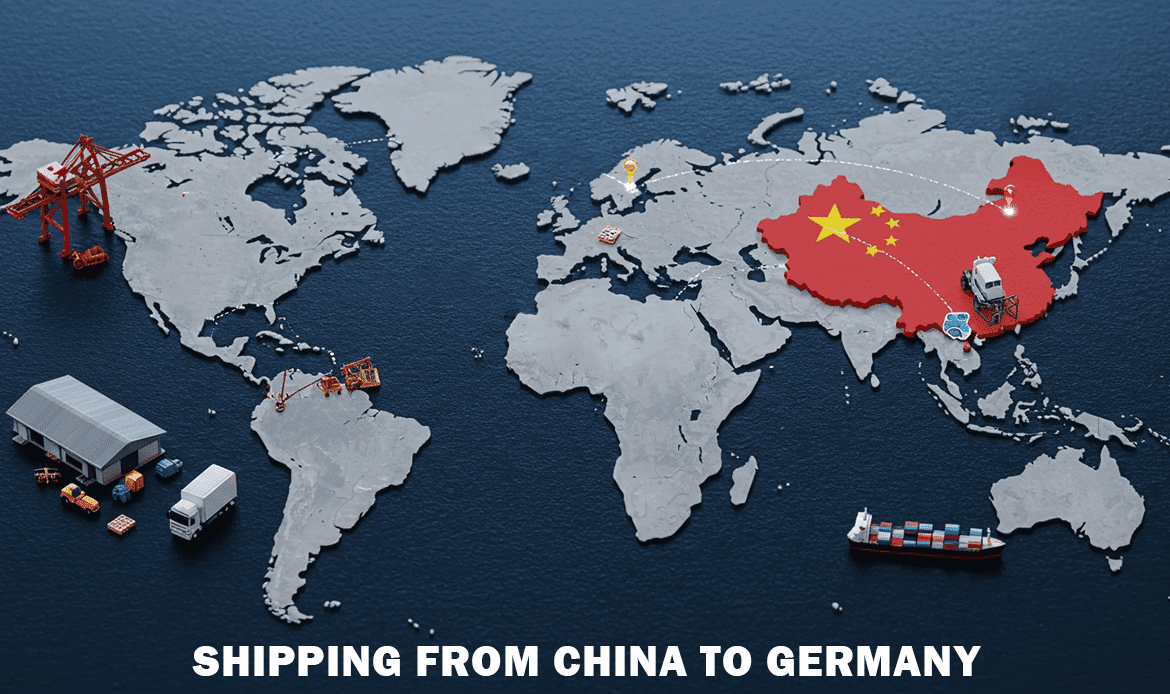
Global trade between China and Germany is thriving, with billions of euros worth of goods moving between the two countries every year. From electronics in Shenzhen to textiles in Shanghai and machinery in Guangzhou, German businesses depend on fast, reliable, and cost-effective shipping from China to Germany to keep supply chains running smoothly.
In this guide, we’ll compare air, sea, and rail freight, break down costs and transit times, explore top routes and ports, and share expert tips for reducing your shipping expenses. Whether you’re a first-time importer or an experienced logistics manager, this is your roadmap to stress-free, efficient shipping.
Why Shipping from China to Germany is in High Demand
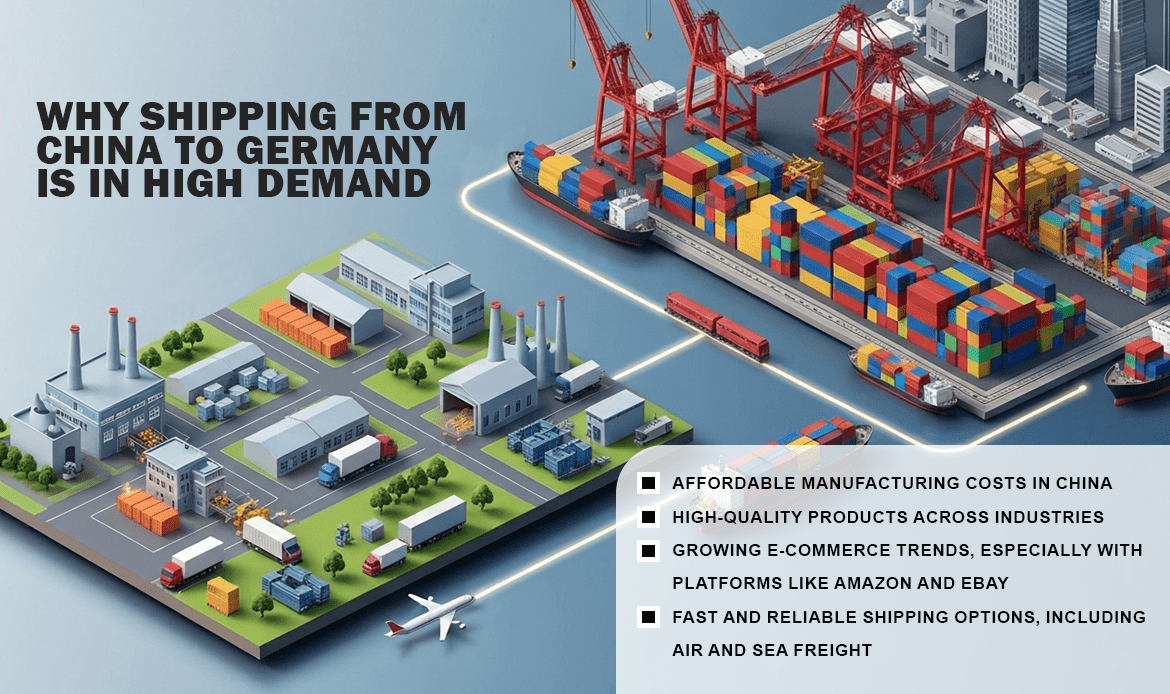
China and Germany share a strong trade relationship, with Germany being one of the largest importers of Chinese goods in Europe. From e-commerce sellers to large-scale manufacturers, businesses rely on efficient shipping from China to Germany to keep their supply chains running smoothly.
The demand is driven by:
- Affordable manufacturing costs in China
- High-quality products across industries
- Growing e-commerce trends, especially with platforms like Amazon and eBay
- Fast and reliable shipping options, including air and sea freight
With such a dynamic trade landscape, choosing the right shipping method is crucial.
Best Shipping Methods from China to Germany
If you need something faster than sea freight but cheaper than air, rail freight is an excellent choice. The China-Europe Railway Express connects major Chinese cities like Chongqing, Xi’an, and Zhengzhou to German hubs like Duisburg, Hamburg, and Berlin.
1. Air Freight: Fastest Option for Urgent Deliveries
If speed is your priority, air freight is the best choice. Major airports like Frankfurt Airport (FRA) and Leipzig/Halle (LEJ) handle tons of cargo daily, ensuring quick deliveries.
Pros:
- Fastest option (3-7 days)
- Better for high-value or perishable goods
- Lower risk of damage compared to sea freight
Cons:
- More expensive than ocean shipping
- Limited by weight and size restrictions
Air freight is ideal for businesses that need urgent stock replenishment or deal with time-sensitive products.
2. Ocean Freight: Cheapest Method for Bulk Shipments
For larger shipments, ocean freight is the most economical solution. Key ports like Hamburg (Germany’s largest port) and Bremerhaven efficiently handle goods from Chinese ports like Shenzhen and Shanghai.
You can choose between:
- FCL (Full Container Load) – Best if you’re shipping enough goods to fill an entire container.
- LCL (Less than Container Load) – Ideal for smaller shipments, where you share container space with others.
Pros:
- Cheaper for heavy/bulk cargo
- More environmentally friendly than air freight
- No strict size limitations
Cons:
- Slower transit times (20-40 days)
- Subject to port delays and weather conditions
If your business can plan ahead, ocean freight offers unbeatable savings.
Ship Smarter with Maskura Logistics
Take the hassle out of international shipping and ensure your cargo reaches its destination on time and safely. Our expert team handles every detail so you can focus on growing your business.
Sea Freight Forwarding3. Rail Freight: Balanced Speed and Cost
If you need something faster than sea freight but cheaper than air, rail freight is an excellent choice. The China-Europe Railway Express connects major Chinese cities like Chongqing, Xi’an, and Zhengzhou to German hubs like Duisburg, Hamburg, and Berlin.
Pros:
- Faster than ocean freight (12-18 days vs. 30+ days)
- More affordable than air freight
- Reliable schedules with fewer delays compared to sea freight
- Eco-friendly (lower carbon footprint than air or sea)
Cons:
- Limited routes (only certain cities in China and Germany are connected)
- Less flexible for last-mile deliveries (may require trucking from rail terminals)
- Not ideal for perishable goods (transit times are still longer than air)
Rail freight is perfect for businesses that need a balance between cost and speed, especially for heavy or bulky shipments like machinery, automotive parts, and industrial goods.
Shipping Methods Comparison: Air vs. Sea vs. Rail
| Factor | Air Freight | Ocean Freight | Rail Freight |
| Transit Time | 3-7 days | 20-40 days | 12-18 days |
| Cost | Most expensive | Most affordable | Mid-range (cheaper than air) |
| Best For | Urgent, high-value, perishable goods | Heavy/bulk cargo, non-urgent shipments | Balanced cost & speed (e.g., machinery, electronics) |
| Cargo Capacity | Limited by weight/size | High (FCL/LCL options) | Moderate (containerized goods) |
| Carbon Footprint | Highest emissions | Lower than air | Most eco-friendly (vs. air/sea) |
| Key Routes | Frankfurt/Leipzig airports | Hamburg/Bremerhaven ports | Duisburg/Hamburg rail hubs |
| Customs & Handling | Fast clearance, high fees | Slower clearance, port delays | Faster than sea, fewer delays |
Shipping Costs from China to Germany: What Affects the Price
Understanding what influences shipping rates from China to Germany helps you budget better. Here are the main cost drivers:
- Shipping Method (Air, Sea, or Rail) – Air is fastest, sea is cheapest, and rail offers a balance.
- Cargo Weight & Volume – Heavier/larger shipments cost more.
- Container Type (FCL, LCL, or rail containers) – FCL for full loads, LCL for shared space, rail containers for overland transport.
- Fuel Surcharges & Seasonal Demand – Prices rise with fuel costs and peak-season demand.
- Customs Duties & Taxes – Germany imposes import fees based on product type and value.
- Port/Rail Terminal Handling Fees – Charges vary by location and cargo handling requirements.
To get the best deal, compare quotes from multiple freight forwarders and plan shipments during off-peak seasons.
Top Ports, Airports & Rail Hubs for China–Germany Trade
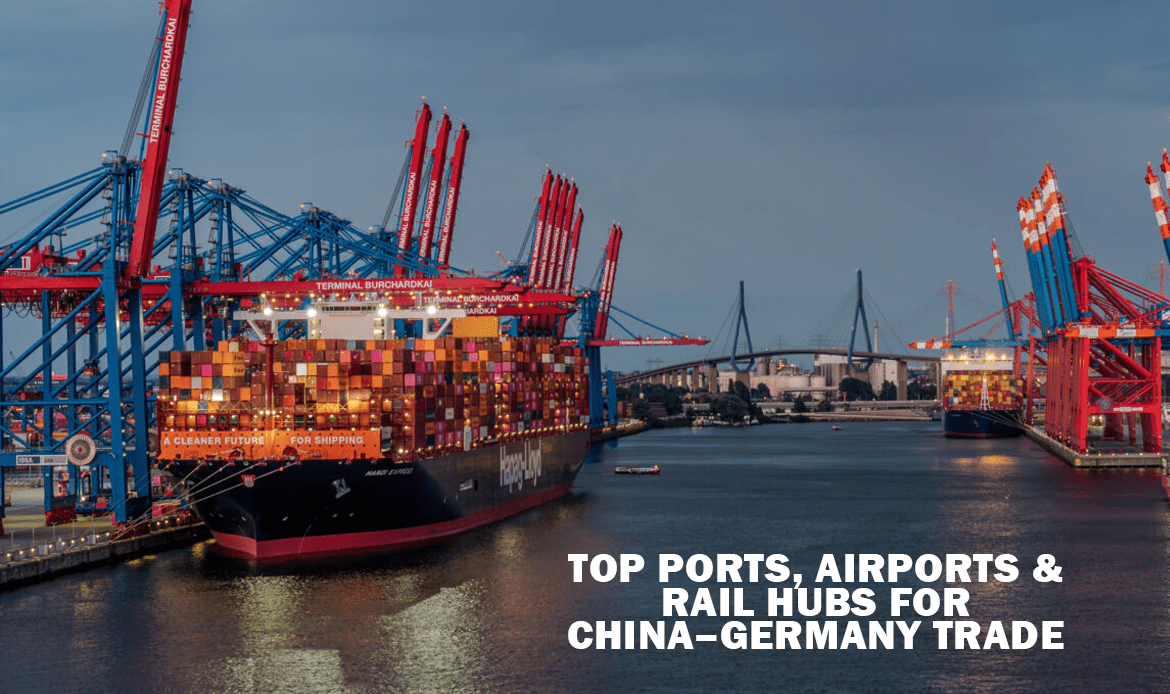
Choosing the right entry and exit points can optimize your logistics.
Major Chinese Ports, Airports & Rail Terminals
- Shenzhen (Yantian Port) – Busiest port for ocean freight.
- Chongqing (West Railway Station) – Key hub for China-Europe rail freight.
- Shanghai (Port of Shanghai & Pudong Airport) – Largest container port and major air cargo hub.
Major German Ports, Airports & Rail Terminals
- Hamburg Port – Germany’s largest seaport.
- Duisburg Rail Hub – Europe’s biggest inland port and primary rail gateway.
- Frankfurt Airport (FRA) – Leading air cargo hub.
Picking the right port can reduce transit times and handling fees.
How to Reduce Shipping Costs Without Sacrificing Reliability
Nobody wants to overpay for logistics. Here’s how to cut costs without sacrificing reliability:
✔ Consider Rail Freight for Mid-Urgency Shipments – Faster than sea, cheaper than air.
✔ Consolidate Shipments – Use LCL or shared rail containers.
✔ Optimize Packaging – Reduce dimensional weight costs.
✔ Avoid Peak Seasons – Plan around holidays and high-demand periods.
✔ Work with a Logistics Expert – They can compare air, sea, and rail options for the best deal.
Customs Clearance for Shipping from China to Germany
German customs are strict, and incomplete or incorrect documentation is one of the most common causes of shipping delays. To avoid extra fees or cargo being held at the port, follow these steps:
Step 1: Prepare Required Documents
Before your shipment leaves China, ensure you have:
- Commercial Invoice – Lists the buyer, seller, goods description, quantity, and value.
- Packing List – Details the contents, packaging type, and dimensions.
- Bill of Lading (B/L) or Air Waybill (AWB) – Proof of shipment.
- Certificate of Origin – Confirms the country where goods were manufactured.
- Import Licenses (if applicable) – Required for restricted items like chemicals, pharmaceuticals, or electronics.
Step 2: Know Your HS Codes
Harmonized System (HS) codes classify your goods for tariff and duty calculation. Using the wrong code can cause costly delays or incorrect tax assessments.
Step 3: Calculate Duties & Taxes
Germany applies import VAT (currently 19%) plus any applicable customs duties. Duties depend on your product type and HS code. You can use the TARIC database to check exact rates.
Step 4: Submit an Import Declaration
For goods valued above €150, you must file an electronic customs declaration via Germany’s ATLAS system. Your freight forwarder or customs broker can do this on your behalf.
Step 5: Prepare for Customs Inspections
Shipments may be randomly inspected. Ensure packaging matches your documentation to avoid fines.
💡 Pro Tip: Work with a freight forwarder who offers customs brokerage services in both China and Germany. This ensures all paperwork is correct and fees are paid in advance, reducing clearance times.
Why Choose Maskura Logistics for Shipping from China to Germany?
When it comes to shipping from China to Germany, you need a logistics partner that’s reliable, cost-effective, and hassle-free. Here’s why Maskura Logistics stands out:
1. End-to-End Shipping Solutions
We handle everything from pickup in China to final delivery in Germany, including:
✔ Air, Sea & Rail Freight – Flexible options for any budget or timeline.
✔ Door-to-Door Service – No hidden fees or middlemen.
✔ Customs Clearance – Expert handling of German/EU import regulations.
2. Transparent & Competitive Pricing
No surprise costs. We offer:
✅ All-inclusive quotes (no hidden port fees).
✅ Discounts for frequent shippers.
✅ Price-match guarantee (find a better rate? We’ll match it).
3. Faster Transit Times with Trusted Networks
Our partnerships with major airlines, shipping lines, and rail operators mean:
✈ Priority air cargo slots (avoid delays).
🚢 Direct ocean routes (Shenzhen→Hamburg in 28 days).
🚆 Dedicated rail space (Chongqing→Duisburg in 16 days).
4. Real-Time Tracking & Proactive Support
Track shipments 24/7 via our digital platform, with:
📍 Live GPS updates (air/road freight).
📅 Port/rail terminal ETAs.
📞 Dedicated account manager (English/German/Mandarin support).
5. German Market Expertise
We know Germany’s customs rules, VAT laws, and delivery networks inside out, ensuring:
✔ Smooth clearance at Hamburg/Duisburg/Frankfurt.
✔ No tax surprises (pre-calculated duties).
✔ Last-mile delivery via trusted local partners.
6. Sustainable Shipping Options
Reduce your carbon footprint with:
🌱 Rail freight (50% lower CO₂ than air).
♻ Eco-friendly packaging solutions.
Ready to Ship Smarter?
Whether you’re an e-commerce seller, manufacturer, or trader, Maskura Logistics makes shipping from China to Germany effortless.
📞 Contact us today for a free quote!
📧 Email: info@maskuralogistics.com
Final Thoughts
Shipping from China to Germany doesn’t have to be complicated. Whether you need:
- Speed? → Air freight
- Affordability? → Ocean freight
- A balance of both? → Rail freight
At Maskura Logistics, we specialize in seamless, cost-effective shipping solutions by air, sea, or rail. From customs clearance to door-to-door delivery, we handle the complexities so you can focus on growing your business.
Ready to simplify your logistics? Get a free quote today and experience hassle-free shipping!
FAQs About Shipping from China to Germany
1. How long does shipping from China to Germany take?
Sea freight usually takes 30–45 days, depending on the route and port schedules. Air freight is much faster, typically 3–7 days, though it comes with higher costs.
2. What’s the difference between FCL and LCL shipping?
FCL (Full Container Load) means the entire container is yours, ideal for large shipments. LCL (Less than Container Load) lets you share a container with other shippers, which is more budget-friendly for smaller volumes.
3. How much does it cost to ship from China to Germany?
A 20ft container can range from $1,150–$3,250, while a 40ft container can be $2,150–$4,850. Rates vary based on cargo size, shipping method, season, and route. Air freight costs are calculated per kilogram, averaging around $3.35/kg.
4. Which are the main ports for this shipping route?
Popular departure ports in China include Shenzhen and Shanghai. Common arrival ports in Germany are Hamburg and Frankfurt for both sea and air freight routes.